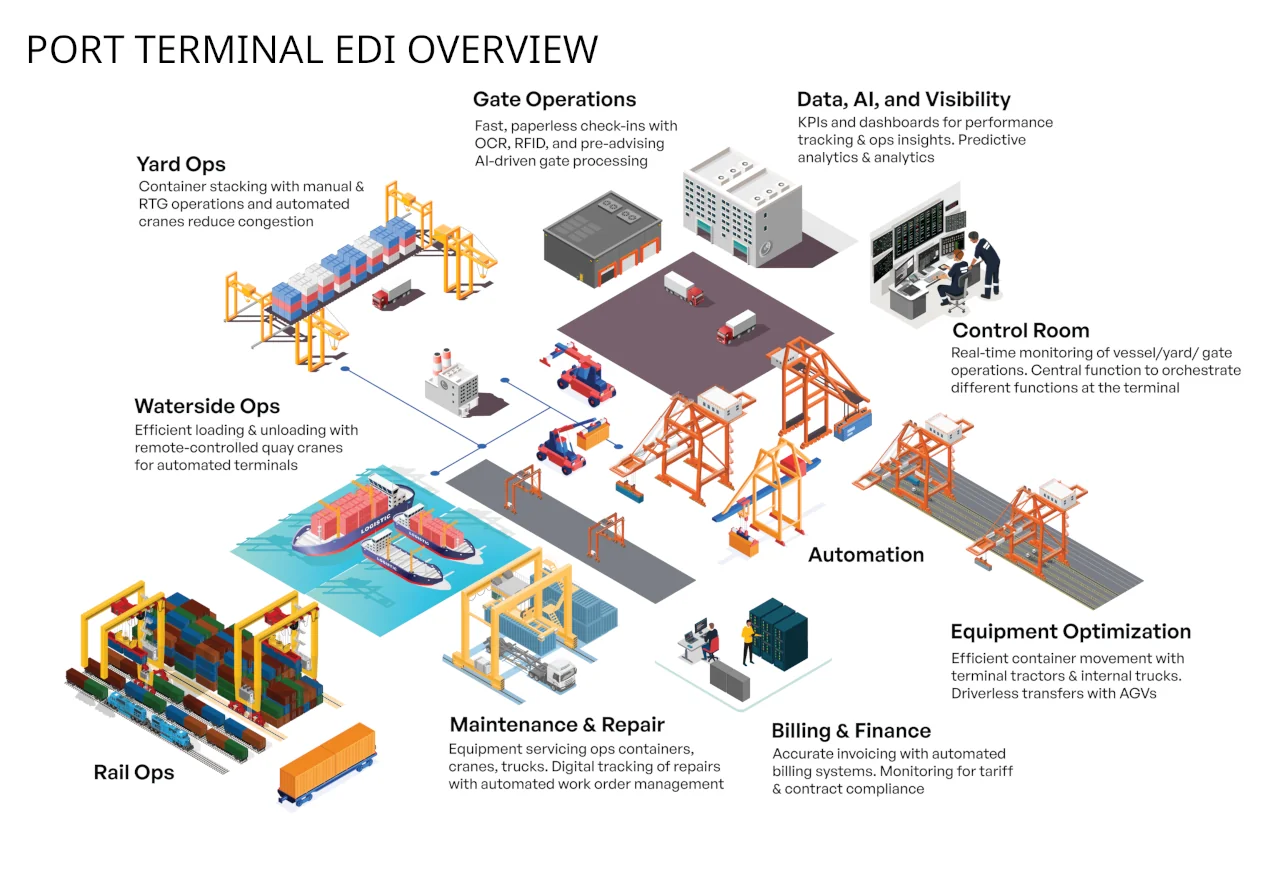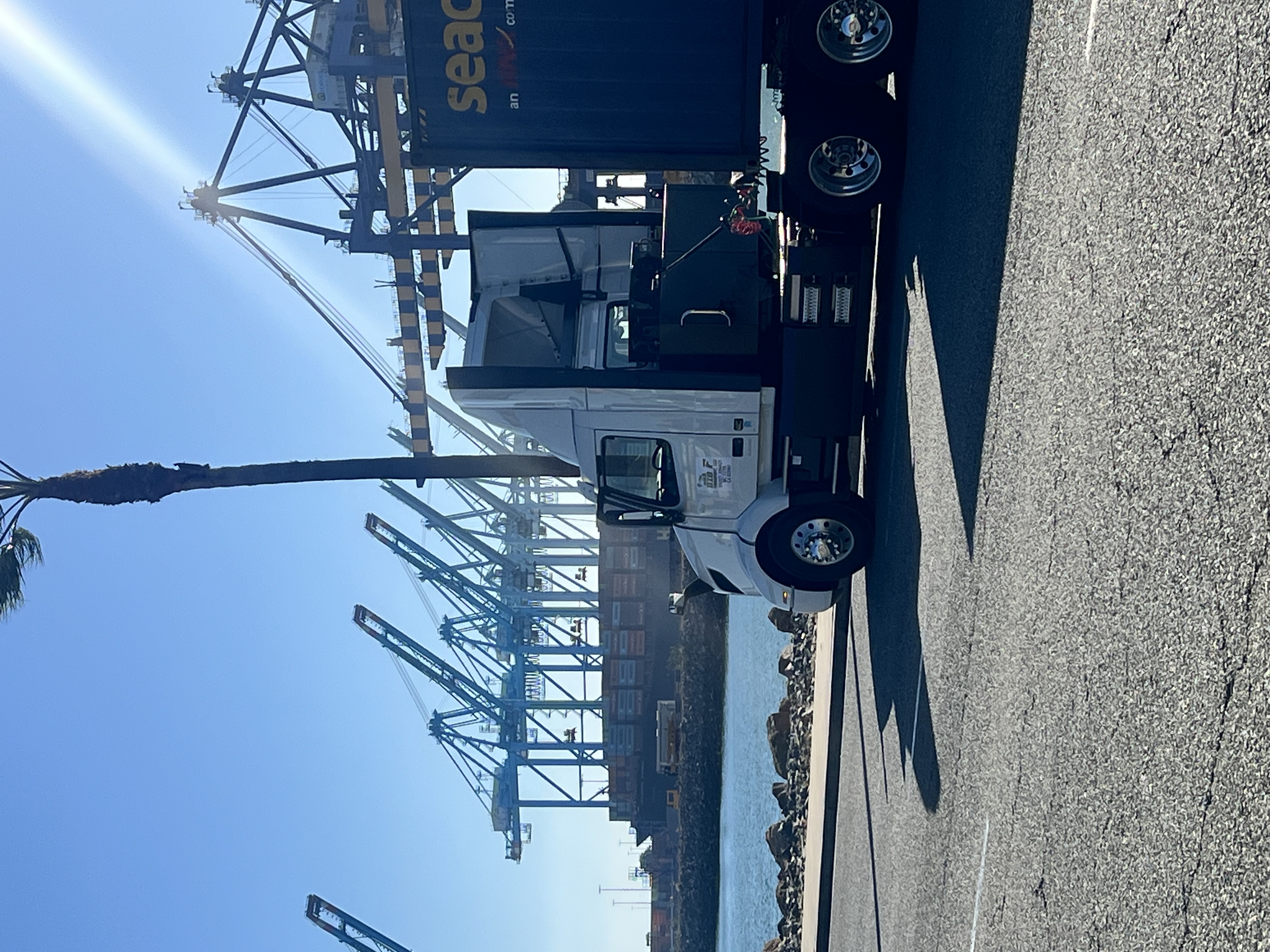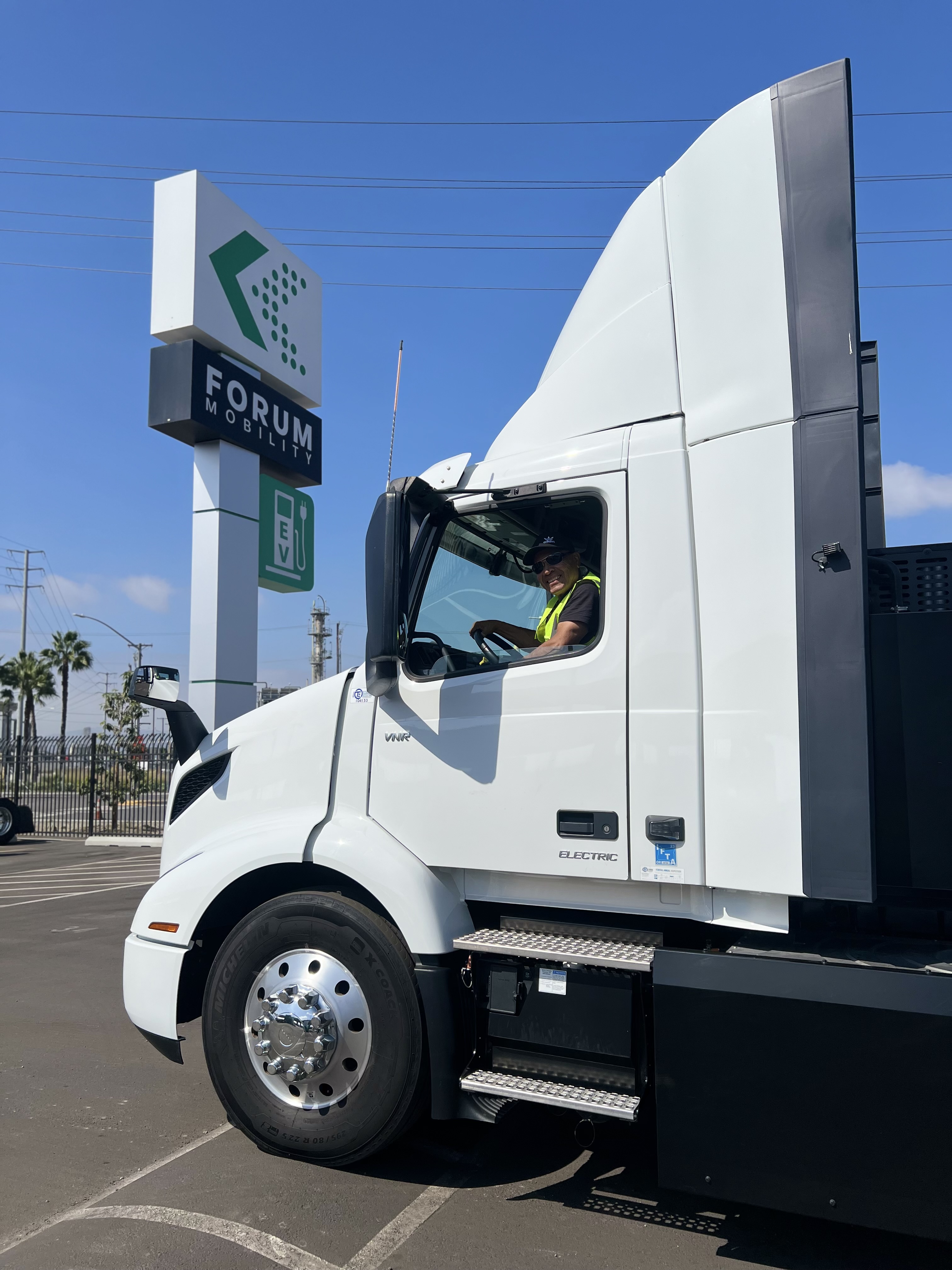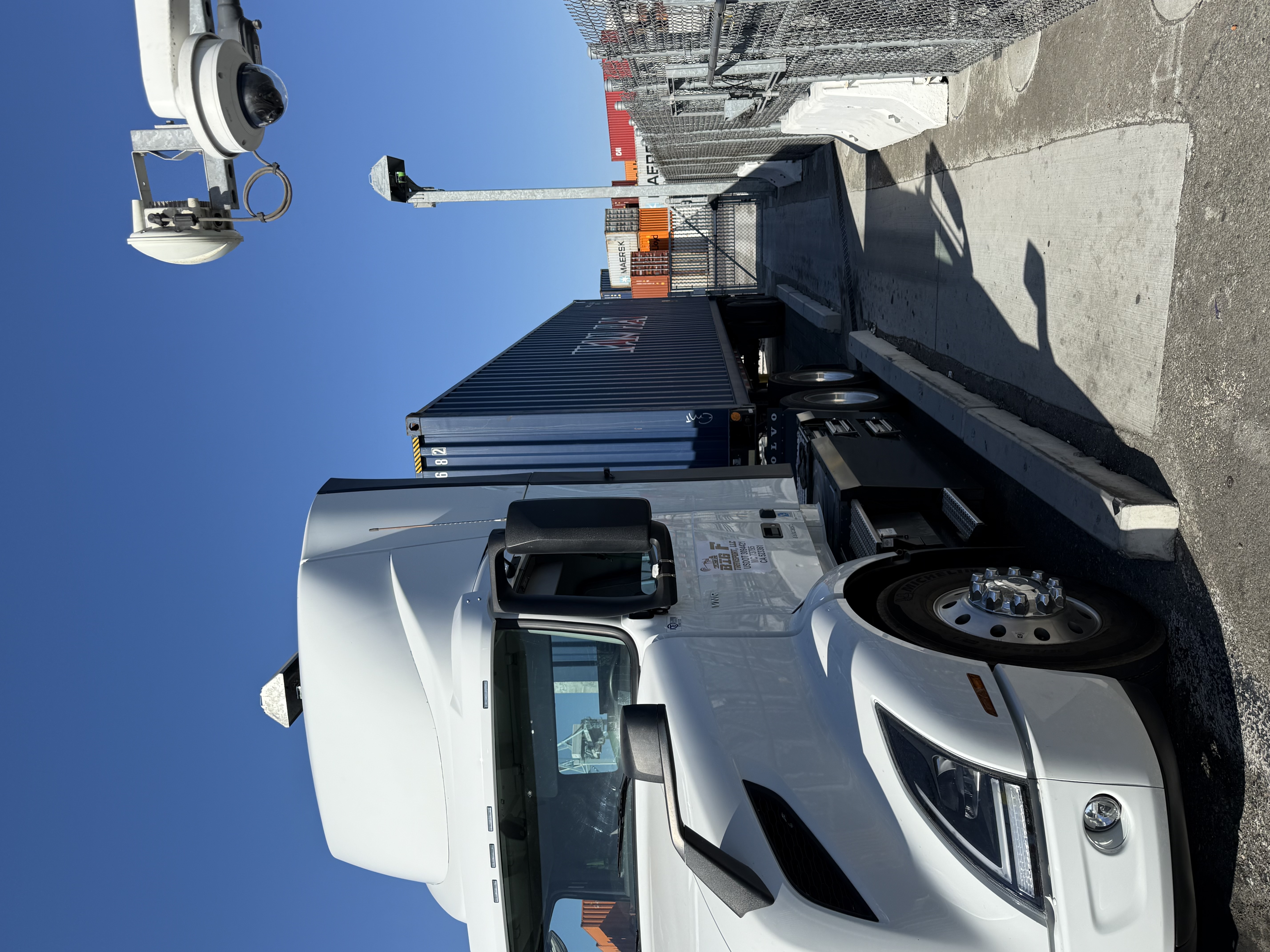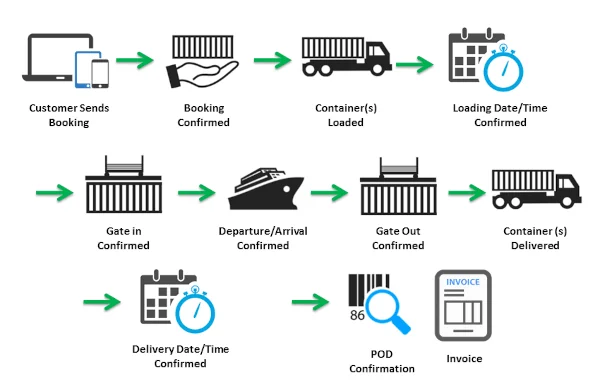
EDI connectivity — For daily reports, automated reporting, terminal EDI connectivity, track and tracing, API for Draydog usage with all port terminals.
EDI connectivity is the backbone of modern drayage and port logistics operations, enabling seamless data exchange between carriers, terminals, and customers. With robust EDI integration, daily reports are generated automatically, giving real-time visibility into container status, moves, and exceptions. This eliminates manual data entry, reduces errors, and ensures stakeholders always have accurate, up-to-date information to make informed decisions.
Automated reporting and terminal EDI connectivity streamline communication with all major port terminals. Status updates such as gate moves, arrivals, departures, and holds are transmitted instantly, allowing operations teams to respond faster and plan more efficiently. Built-in track and trace functionality provides continuous container visibility from terminal pickup to final delivery, improving reliability and customer satisfaction.
An API built for Draydog usage extends these capabilities even further by connecting directly with all port terminals and internal systems. This flexible integration supports custom workflows, advanced analytics, and scalable growth as volumes increase. By leveraging EDI and API connectivity together, drayage providers gain a unified, efficient, and future-ready logistics ecosystem.
Key benefits of EDI & API connectivity:
-
Automated daily reports with real-time track and trace across all port terminals
-
Direct terminal EDI connectivity to reduce delays, errors, and manual work
-
Powerful API integration for Draydog usage, enabling scalable and customizable operations
Port of Los Angeles
Port Terminal EDI connectivity plays a critical role in enabling the Port of Los Angeles to manage one of the busiest container ports in the Western Hemisphere with speed and precision. By integrating terminal operators, ocean carriers, rail providers, trucking companies, U.S. Customs, and other stakeholders through standardized electronic data interchange, the LA Port Authority gains real-time visibility into vessel arrivals, container availability, gate activity, and cargo flows. This level of connectivity allows the port to better coordinate terminal operations, reduce congestion, and proactively manage peak volumes, especially during high-demand periods.
For the LA Port Authority, EDI connectivity also supports regulatory compliance, security initiatives, and sustainability goals. Automated data exchange improves accuracy in reporting for customs, environmental programs, and port performance metrics while reducing manual processing and administrative overhead. Enhanced data transparency helps the port authority optimize infrastructure usage, support data-driven decision-making, and collaborate more effectively with tenants and regional transportation partners. Ultimately, robust Port Terminal EDI connectivity strengthens the Port of Los Angeles’ efficiency, resilience, and global competitiveness as a vital gateway for U.S. trade.